Company
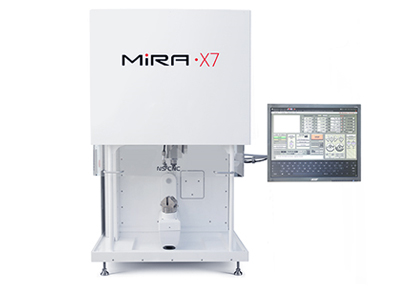
The Mira 6S is a compact 5-axis desktop mini CNC machine designed for precision milling of wax and other soft materials, primarily for jewelry manufacturing. Its compact footprint makes it ideal for jewelry designers, model makers, and small-scale production.
The Mira 6S is part of the Mira series, a family of mini CNC machines developed and manufactured by NS CNC for many years. Mira machines have been used by thousands of jewelry companies worldwide to produce detailed wax models, patterns, and complex jewelry components directly from digital designs.
Its 5-axis configuration allows the workpiece to be positioned from multiple directions, making it possible to machine complex three-dimensional forms that are difficult or impossible to produce on a conventional 3-axis machine. This is especially valuable for intricate surfaces, undercuts, and organic shapes common in jewelry.
Combining a small desktop footprint with high precision and repeatability, the Mira 6S provides a direct link between 3D CAD designs and detailed physical wax models for professional jewelry production.
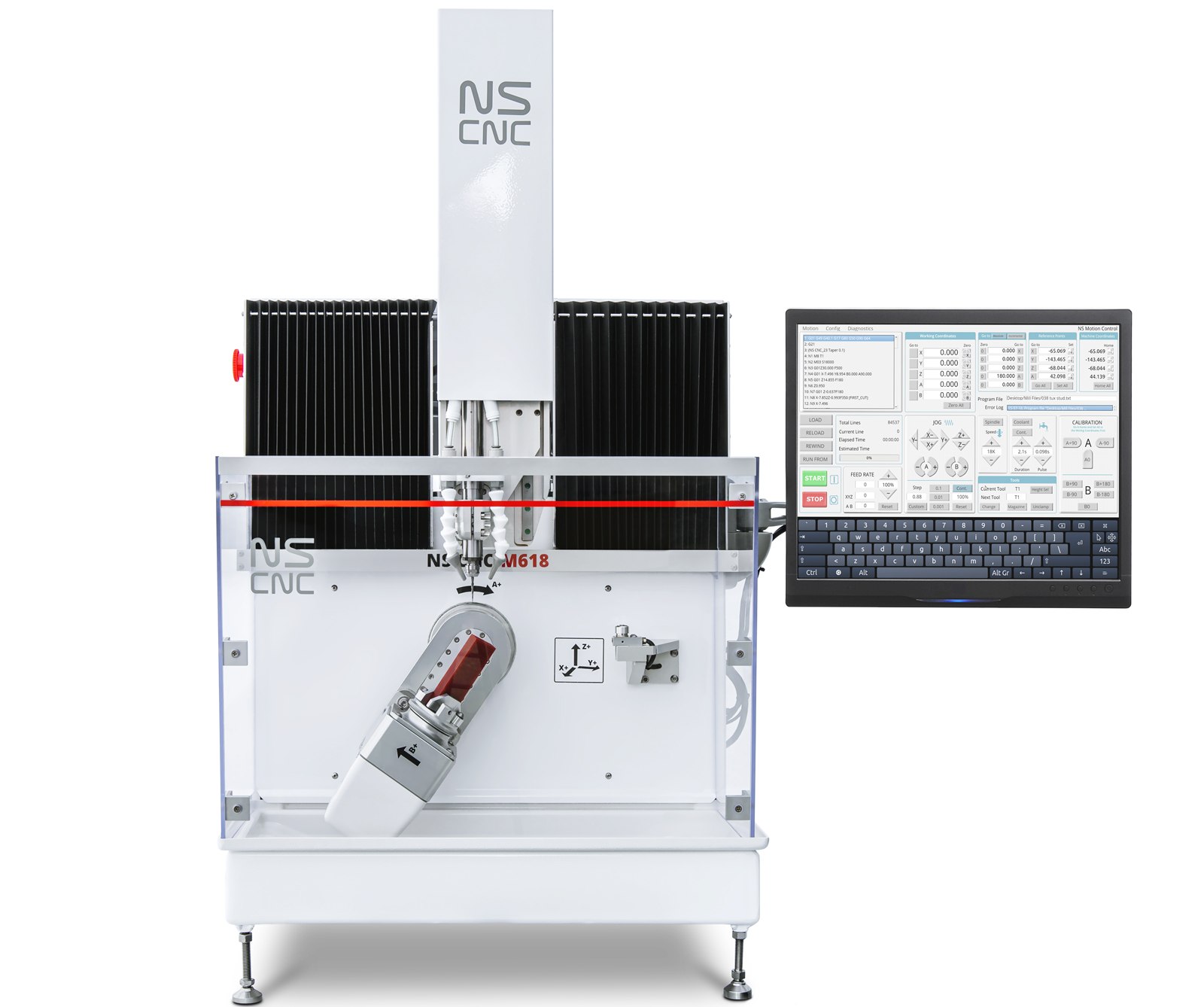
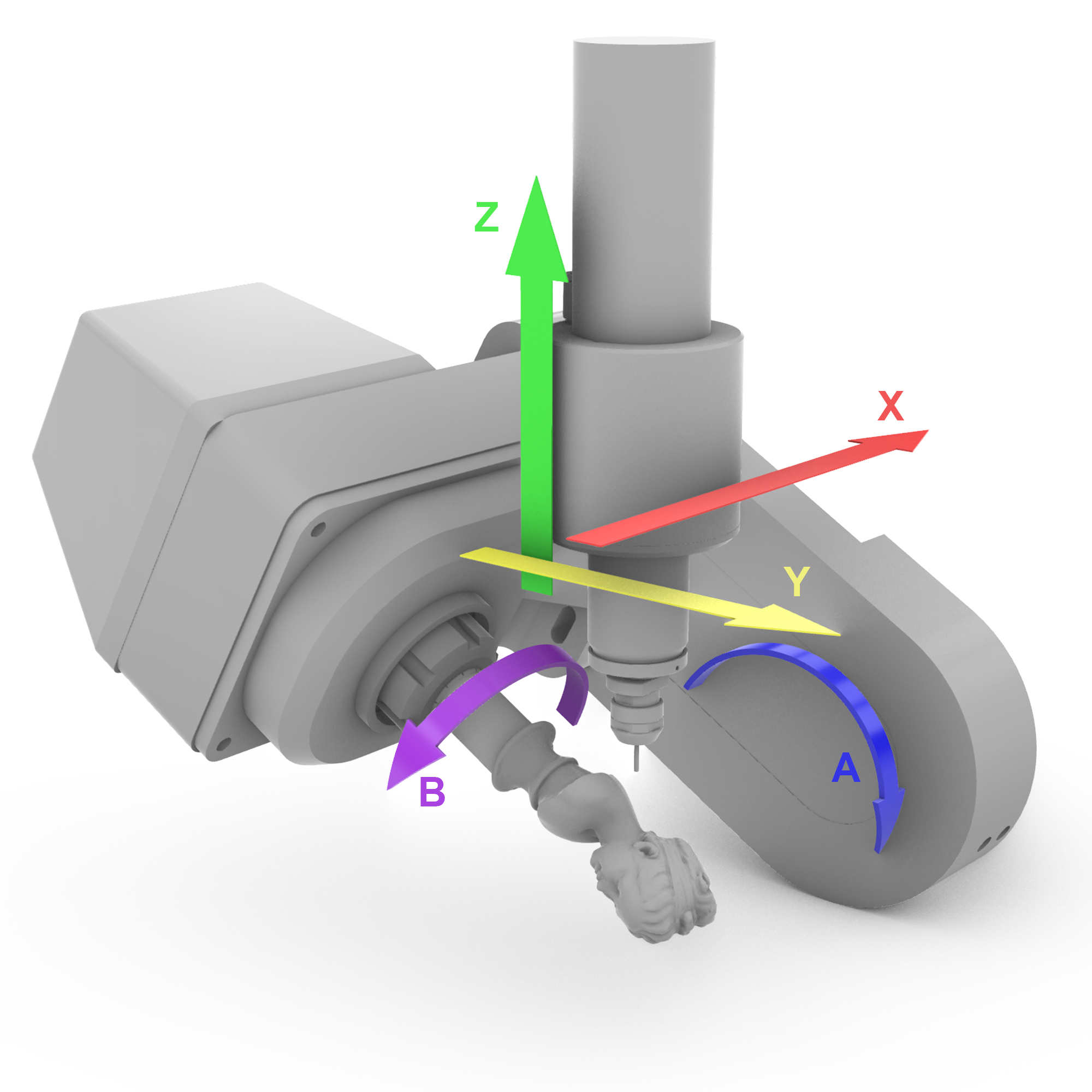
There are several different configurations of 5-axis machine tools, each suited to specific types of machining. For ultra-high-precision milling of miniature parts, one of the most advantageous arrangements is a configuration in which all five coordinate axes intersect at a single point located at the center of the workpiece or model.
This geometry minimizes the distance between the point of rotation and the cutting area, reducing the effects of angular movement and positioning errors. As a result, the machine can maintain greater accuracy when the cutting tool approaches the workpiece from different directions.
This configuration is particularly beneficial for micro-milling, where even very small positional errors can have a significant effect on the final dimensions and surface quality of the part. It also allows the machine to maintain a more consistent tool orientation while machining complex three-dimensional surfaces, including steep walls, undercuts, and other intricate features.
Undercuts, full-round detail, open lattices - geometry that requires presenting the workpiece to the cutter from any angle, milled in one setup without repositioning.
Motion, control computer, coolant, and the dual rotary table in a 22 × 32 × 39″ footprint. The numbers reference the photo.
NSK Nakanishi NR-2351 with ceramic bearings - up to 50,000 RPM, runout of 1 micron or less. Coolant nozzles flank the collet.
The A and B axes rotate the workpiece across two axes - 360° continuous, up to 300°/sec - managed by Smart Angular Movements Control. The B head is fully sealed against water and humidity.
Catches the flow and returns it to the 6-gallon (23 L) self-filtering reservoir. The fluid is NS-Cool, a water-soluble oil concentrate.
Ball screws and precision motors drive every axis - high speed, high force, no measurable backlash.
Flexible covers seal the linear rails behind them against wax chips and coolant.
The 5-axis control program runs on a mini PC built into the machine - monitor, keyboard, and JewelryCAM included. Nothing extra to buy or connect.
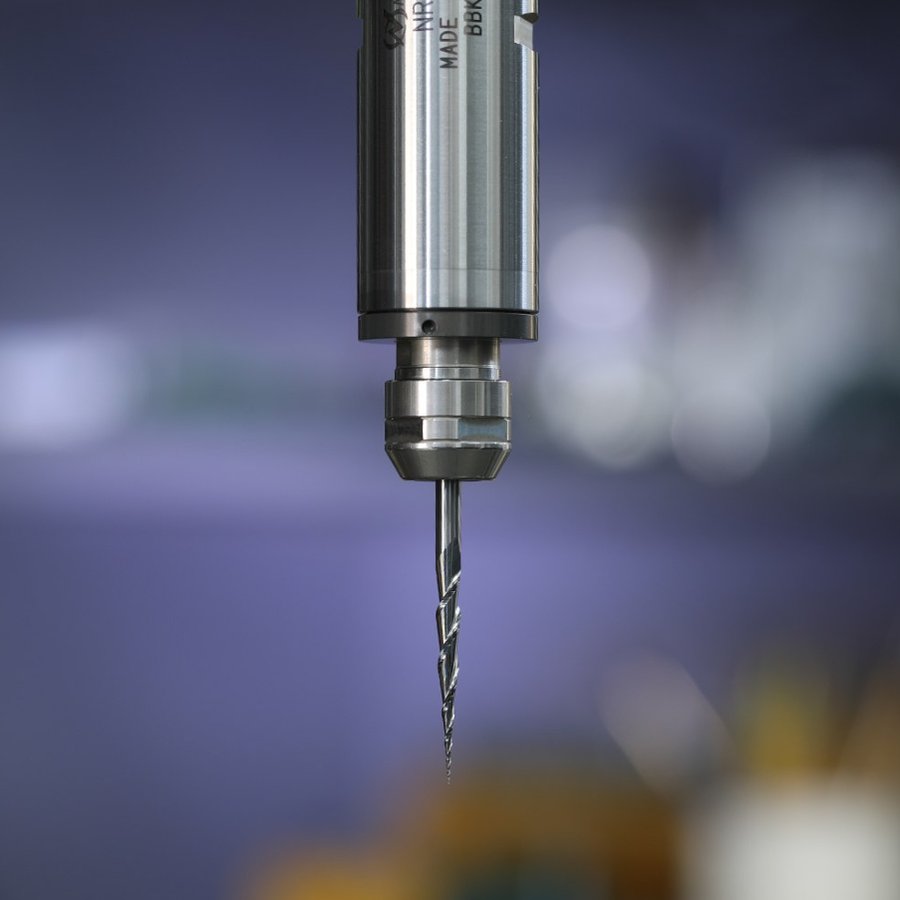
All NS CNC machines are equipped with high-precision NSK Nakanishi spindles, manufactured in Japan. Nakanishi is a globally recognized specialist in high-speed, high-precision miniature spindles and is widely known for the exceptional accuracy, reliability, and consistency of its products.
For micro-milling, spindle accuracy is critical. Even a small amount of tool runout can have a significant effect when using miniature cutters. Nakanishi spindles used on NS CNC machines provide exceptionally low runout, with cutter runout within the collet of no more than 1 micron. This level of accuracy helps ensure precise cutting, consistent tool performance, and repeatable machining results.
Another important advantage is the wide selection of precision collets available for Nakanishi spindles. Collets are available in sizes from 1 mm to 6 mm in 0.1 mm increments, allowing the spindle to securely hold a wide range of miniature cutting tools. This unusually broad selection makes it possible to select a collet closely matched to the tool diameter rather than relying on a limited range of standard sizes.
The spindle and collet system also plays an important role in achieving the full potential of NS CNC machines. High spindle accuracy helps minimize tool deflection and runout, while precise tool holding contributes to consistent dimensional accuracy and surface finish.
Nakanishi spindles are available in different configurations to suit various NS CNC applications, from machining soft materials and wax to precision milling of metals and other demanding materials. Depending on the machine configuration, the spindle can also be integrated with an automatic tool-changing system, allowing multiple tools to be used during a single machining operation.
The combination of NS CNC motion control, precision mechanics, and NSK Nakanishi spindle technology provides a high level of accuracy and repeatability - an essential requirement for micro-milling applications where even a few microns can make a significant difference.
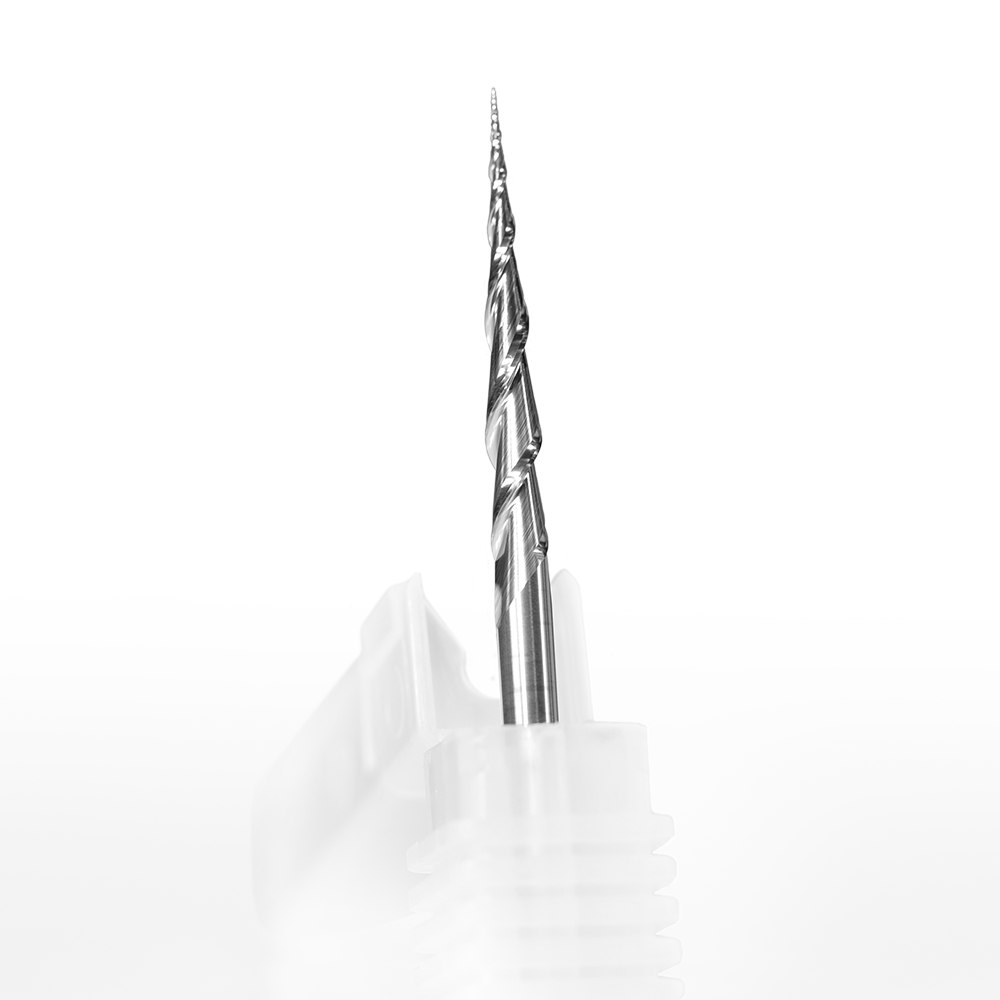
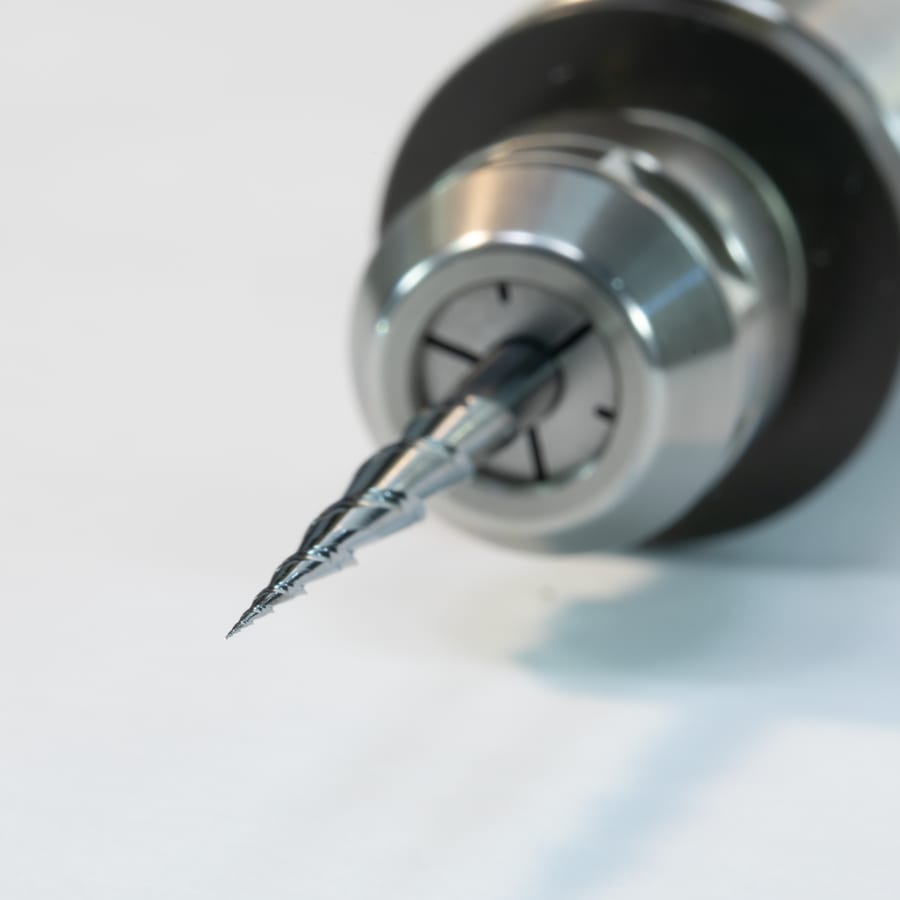
The Mira-Bit from NS CNC is a specialized milling cutter developed specifically for the precision machining of jewelry modeling wax. Its geometry and dimensions are optimized for producing highly detailed jewelry models, where extremely small features, sharp transitions, and deep recessed areas must be reproduced accurately.
Made from high-quality carbide, the Mira-Bit is designed for long service life. When the recommended machining parameters - including feed rate, step-over, and spindle speed - are followed, a single cutter can typically be used for at least one year of regular jewelry modeling work.
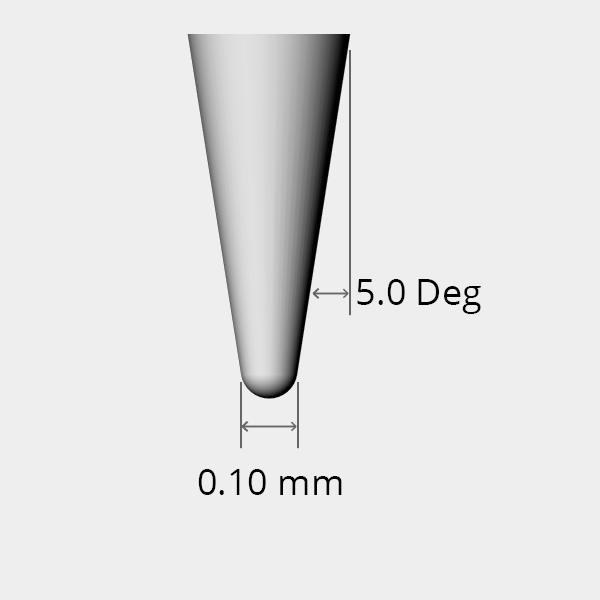
One of the key features of the Mira-Bit is its 0.10 mm diameter ball tip. Combined with a 5° side angle and a specially ground two-flute cutting edge, this geometry allows the cutter to reach areas that are inaccessible to larger or more conventional milling tools. The small ball tip is particularly useful for machining fine contours, narrow recesses, small details, and complex three-dimensional surfaces.
The cutter is designed to provide a clean and consistent surface finish while maintaining the dimensional accuracy required for professional jewelry production. Its geometry allows jewelers to machine intricate patterns and delicate forms while minimizing the amount of manual finishing required afterward.
The Mira-Bit is especially well suited to the production of detailed wax models for casting and other jewelry manufacturing processes. It can be used for both relatively simple designs and highly intricate models containing small decorative elements and deep, difficult-to-reach areas.
The Mira-Bit has been used by jewelers around the world for decades. Its long history in professional jewelry manufacturing reflects its practical design and the demanding requirements of precision wax milling.
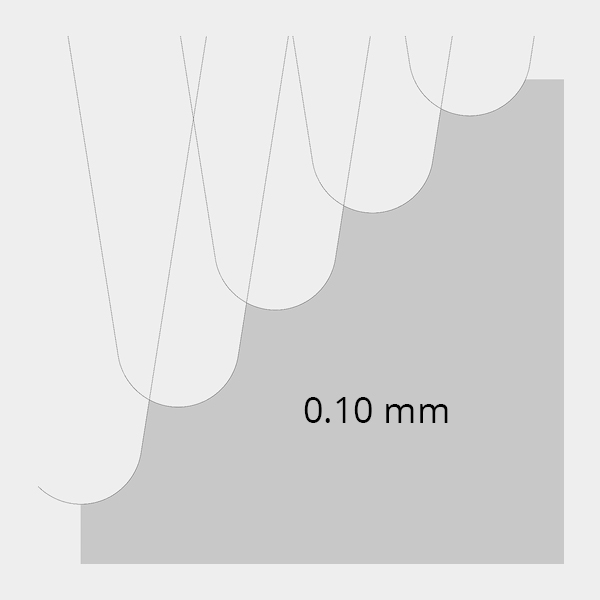
These images demonstrate how stepover size directly affects the surface quality produced when milling a complex organic surface. A smaller stepover leaves less material between adjacent toolpaths, resulting in a smoother surface and reducing the need for subsequent finishing.
The objective of milling jewelry wax with a single cutter, without changing tools, is to achieve different levels of surface quality simply by adjusting the stepover. By selecting the appropriate stepover for each application, the same cutter can produce either a faster rougher finish or a finer, smoother surface suitable for highly detailed jewelry models.
This approach provides flexibility while simplifying the machining process and eliminating unnecessary tool changes.
Passes barely overlap. Scallops between them are plainly visible and need hand work.
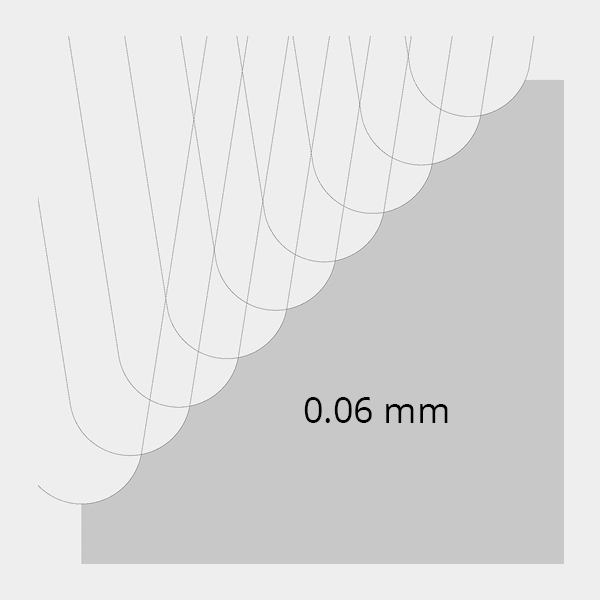
Closer passes, smaller ridges - the stepped edge starts to read as a surface.
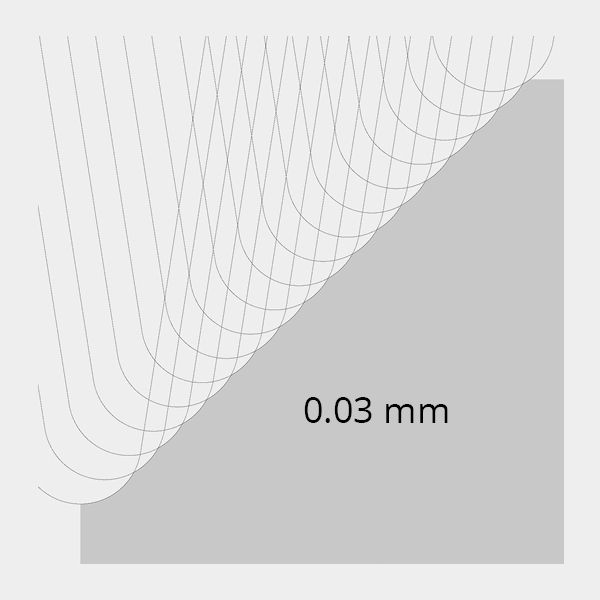
Scallops shrink to a fine texture; most detail comes off the machine ready.
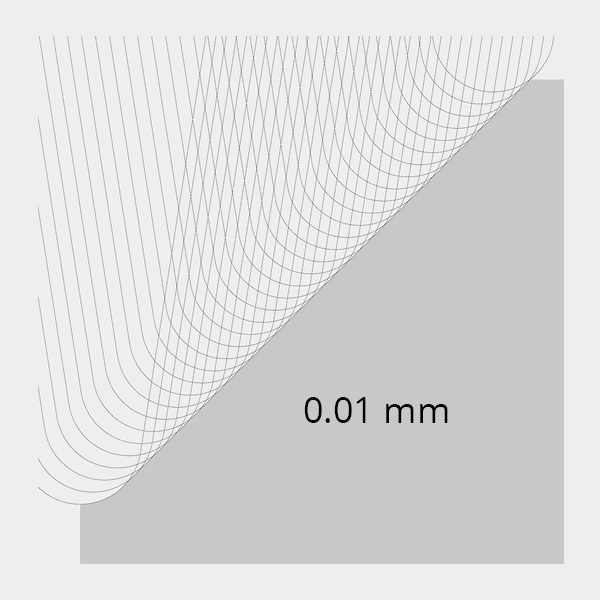
Passes overlap almost completely, leaving a smooth surface and little to finish.
Stepover - the distance the cutter shifts between passes - sets both the finish and how long the job runs.
A coarse stepover clears the part quickly and leaves visible tool marks. A finer stepover overlaps each pass further, so the surface comes off the machine closer to finished and needs less hand work afterwards.
The table and graph show the run time for the same part at each setting. Halving the stepover roughly doubles the number of passes, so time climbs steeply at the fine end while the gain in finish gets smaller.
Which setting fits depends on the part: a wax master for casting is usually cut fine, a fixture or a test piece coarse.
| Stepover (mm) | Milling time (hours) |
|---|---|
| 0.050 Extra-coarse | 0.5 |
| 0.030 Coarse | 1 |
| 0.020 Medium | 2 |
| 0.015 Fine | 4 |
| 0.010 Extra-fine | 6 |
All NS CNC machines are equipped with an integrated coolant system designed to improve cutting performance, protect tooling, and maintain a clean working environment. The system uses a water-soluble cutting oil diluted with water at an approximate ratio of 1 part oil to 5 parts water.
The coolant system features continuous circulation and self-filtering. A pump delivers coolant from the tank to the cutting zone through the nozzles. The coolant then flows back into the tank, passing through several filters that remove chips and fine machining debris before the coolant is recirculated.
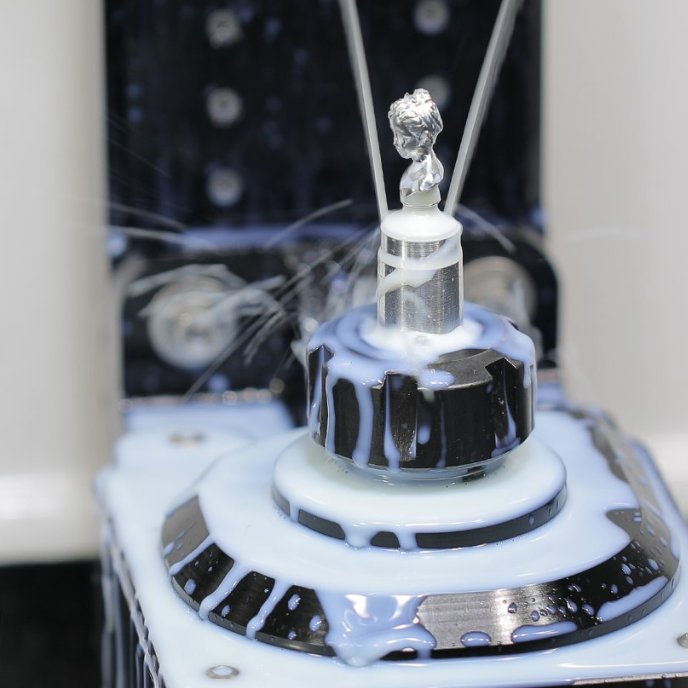
Coolant is essential for many milling operations, particularly when machining metals. Its main functions include:
Coolant removes heat generated during milling and helps prevent the milling cutter and workpiece from overheating. This is especially important when machining metals and during prolonged or demanding operations.
The coolant reduces friction between the cutter and the workpiece, helping to reduce tool wear and extend cutter life.
By reducing heat and friction, coolant can contribute to more stable cutting conditions and improved surface quality.
The flow of coolant helps remove chips and machining debris from the workpiece and cutting zone, reducing the possibility of chips interfering with the cutter.
During operations that generate fine particles, coolant helps prevent chips and dust from becoming airborne and spreading around the working area.
When milling precious metals such as gold, silver, or platinum, the coolant system and its filtration system help capture and retain valuable chips and particles generated during machining. This makes it easier to recover the material and minimize waste.
Maintaining an appropriate coolant flow helps control the temperature of the workpiece and reduces the accumulation of machining debris inside the working area.
The coolant system is an important part of the NS CNC machining process, providing effective cooling, lubrication, chip removal, and waste collection while helping maintain consistent machining conditions.
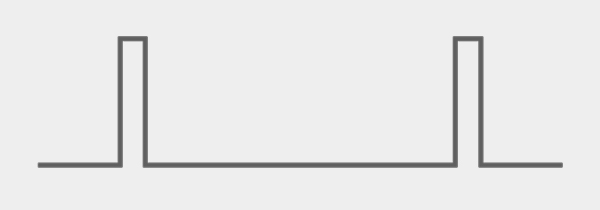
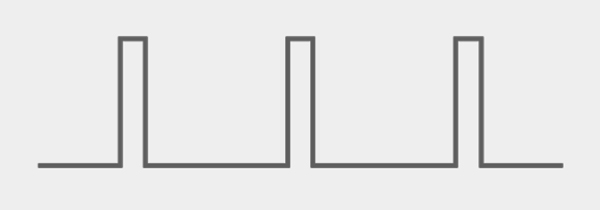
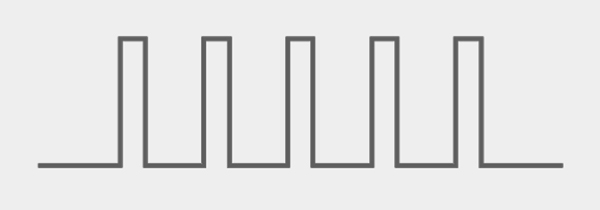
The machine’s coolant system is equipped with solenoid valves that enable pulsed coolant delivery. This feature allows coolant to be supplied intermittently rather than continuously, helping reduce coolant consumption while maintaining effective cooling and improving chip evacuation from the machining zone.
The pulsation function provides two adjustable parameters:
Pulse - the duration of each coolant injection, adjustable from 0 to 1 second.
Duration - the interval between coolant pulses, adjustable from 0 to 5 seconds.
By adjusting these two parameters, the coolant delivery pattern can be precisely matched to the requirements of a particular milling operation. Different pulse settings can be used depending on the material, cutter size, spindle speed, feed rate, and amount of material being removed.
This flexibility is particularly useful for operations where continuous coolant flow is unnecessary. The examples shown in the images demonstrate several coolant pulsation settings and their application to different milling strategies.

As with any CNC manufacturing process, operating the Mira 6S involves three software stages. First, a 3D model is created in a CAD program. The model is then imported into a CAM program, where it is converted into CNC machine code. Finally, the resulting code file is loaded into the machine’s control software.
Once the program is loaded, the machine is set up, the workpiece is securely clamped, and the machining process is started by pressing the Start button.
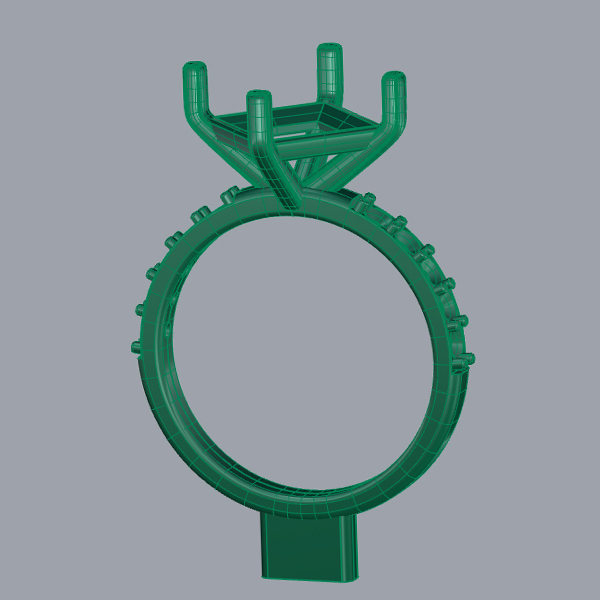
3D ring design created in the Rhino software.
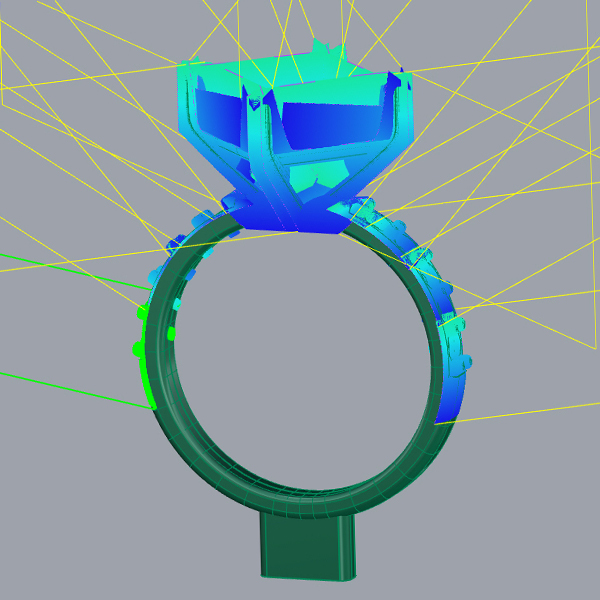
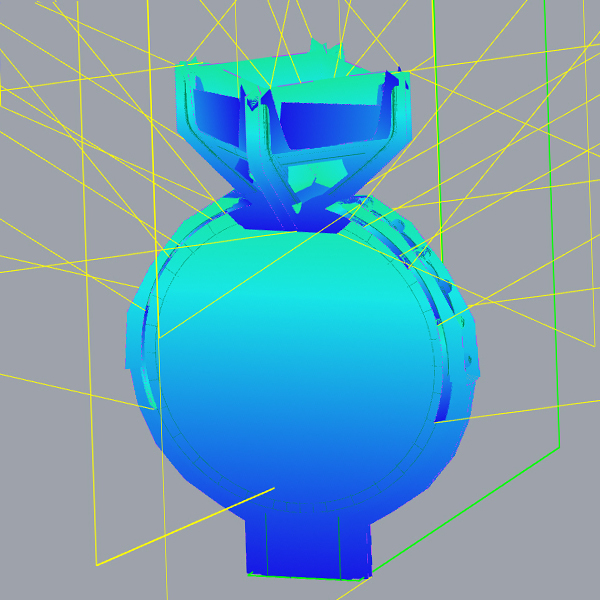
Calculating toolpaths in the JewelryCAM.
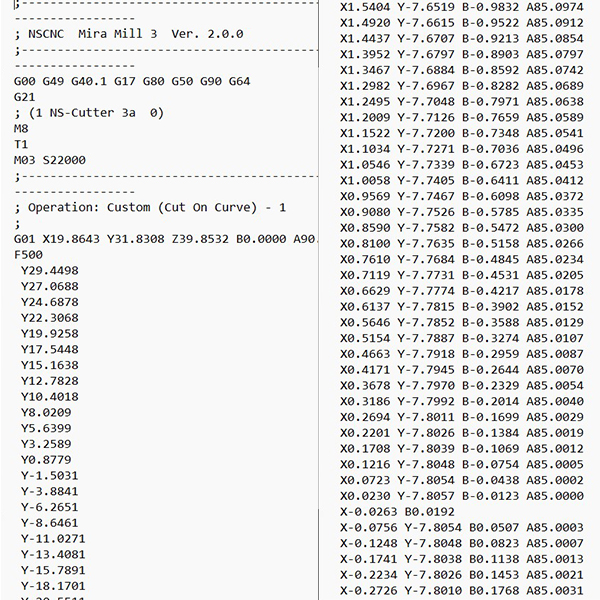
Machine codes generated in the JewelryCAM.
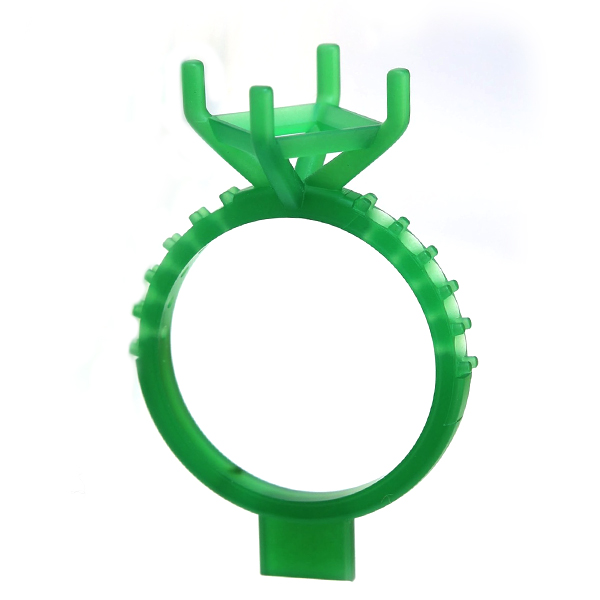
Wax model milled by machine according to codes.
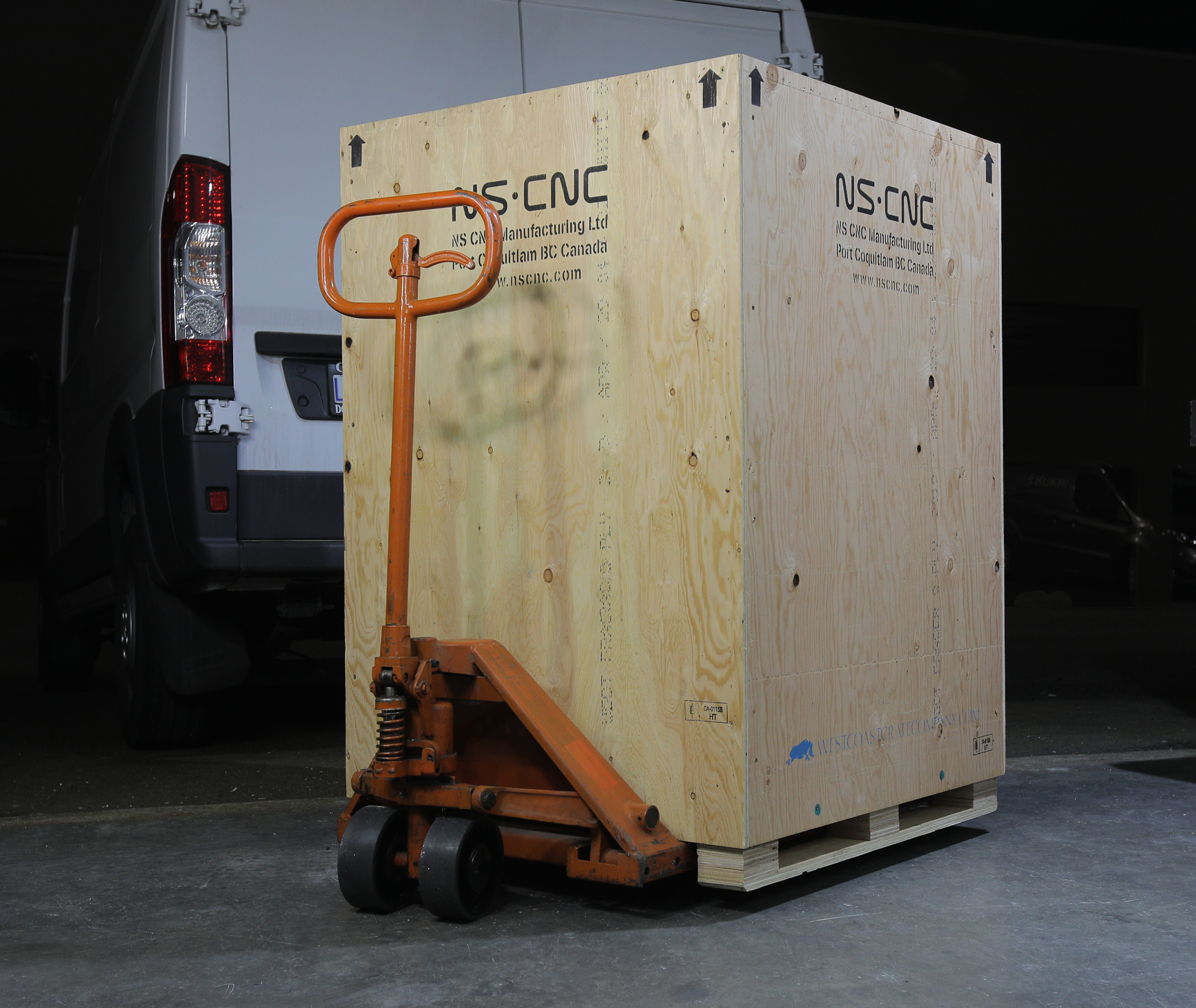
Every Mira 6S ships assembled and calibrated, with the software, tooling, and start-up supplies to begin cutting.
Wax models and rapid prototypes for jewelry - ring bands, settings, sculptural pieces - milled from modeling wax with surfaces fine enough to invest and cast without hand-finishing the wax first.
Common 3D formats, including Rhino3D, Matrix, and RhinoGold. JewelryCAM runs as a Rhino 3D plugin, so work from any Rhino-based suite moves straight to the machine.
The working envelope is 4.75″ (123 mm) in X, 7.50″ (190 mm) in Y, and 6.50″ (163 mm) in Z, with both rotary axes turning 360° continuously. The A turntable is 6″ (150 mm); the B turntable is 4″ (100 mm).
Only for top spindle speed. With an air supply the spindle reaches 50,000 RPM; without one it runs up to 30,000 RPM.
A liquid-cooled, self-filtering system circulates NS-Cool - a water-soluble oil concentrate - continuously from a 6-gallon (23 L) reservoir. The B-axis rotary head is fully sealed against water and humidity penetration.
Standard wall power: 110 V, single-phase, with a power consumption of approximately 800 W. If your country uses 220–250 V mains power, we will supply a step-down transformer with the machine.
Machining demonstrations across NS CNC machines - including the Mira 6S milling wax on camera.
Send a design - a Rhino file, a sketch, the finished-piece dimensions. We’ll tell you whether it’s a Mira 6S job, how we’d run it, and what the machine costs.
The Mira 6S is sold direct through the shop; equipment financing is available through our financing partner.